
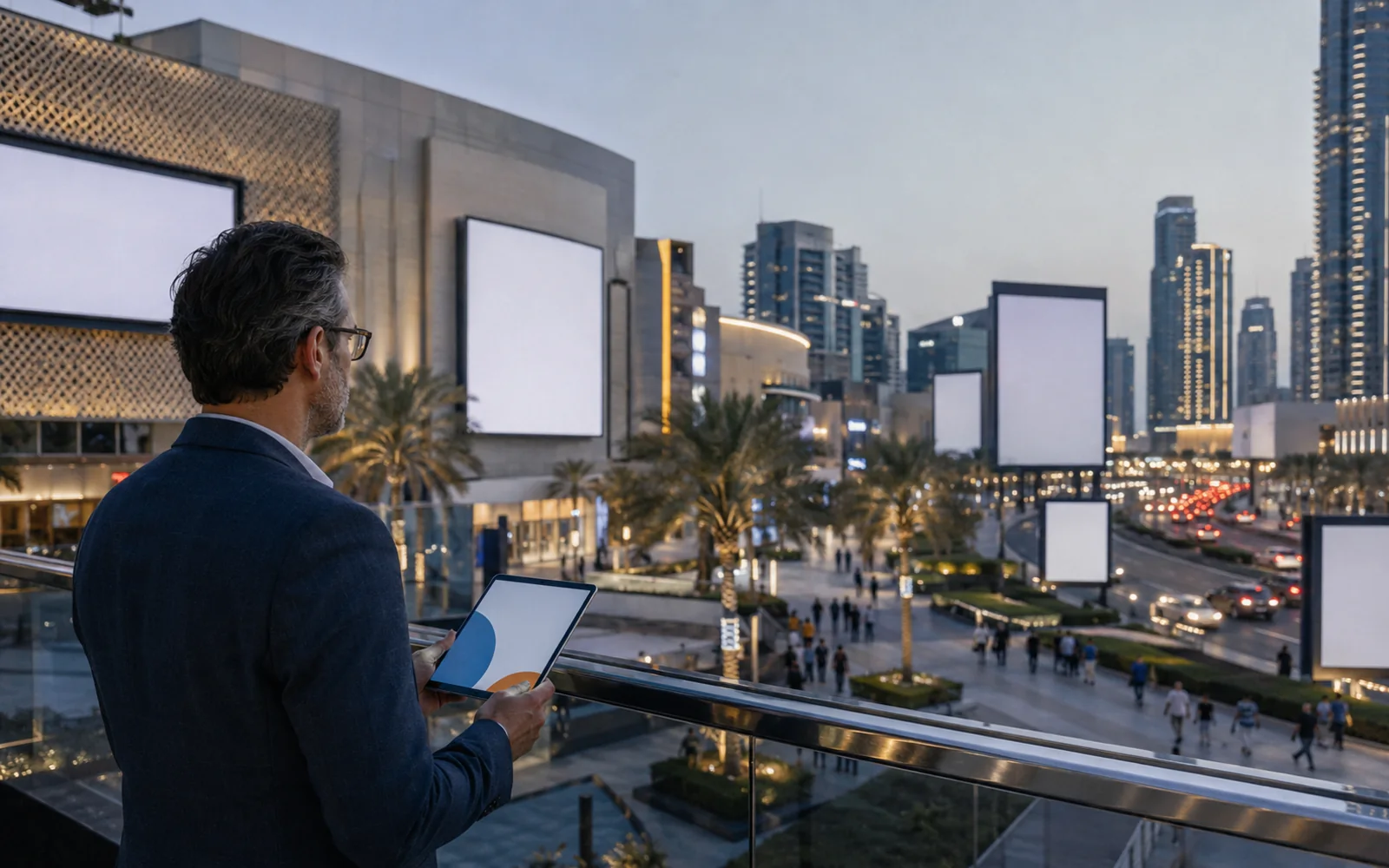
Map audience movement before choosing screens
Start with the people the campaign needs to influence and the places their routines create a useful opportunity to notice. Roadside, retail, transit, residential, office and hospitality environments play different roles; the most famous site is not automatically the most useful one.
Give each environment a clear job
A landmark placement may create stature, a route of repeated screens may build frequency, and place-based media may reach people close to a relevant decision. A strong plan can combine these roles while keeping the audience and objective visible.
Design creative for real viewing conditions
Outdoor messages compete with movement, distance and limited attention. Prioritise one idea, strong contrast, recognisable branding and a readable hierarchy. Digital screens can add motion and rotation, but additional frames should not turn a simple message into a presentation.
Confirm availability and approvals before production
Inventory, specifications, booking windows, artwork deadlines and approval requirements vary by media owner, environment and campaign category. Confirm the current requirements for the selected sites before final artwork and allow enough time for revisions.
Connect exposure with the wider campaign
Plan proof-of-posting and delivery reporting, then connect outdoor activity with search, social, location-aware digital follow-up, brand studies or business outcomes where appropriate. Measurement should be agreed before the booking, not added after launch.
Build the schedule around the audience moment
Timing should reflect when the audience travels, shops, works, attends events or makes the relevant decision. Campaign length and repetition matter as much as the opening date. Consider seasonal traffic, major events, production lead times and whether the outdoor route must create rapid launch impact or sustained familiarity. Availability should be checked against the actual proposed period before the route is treated as final.
Prepare a production-ready specification sheet
For every selected format, document dimensions, file type, safe areas, animation length, frame count, copy limits, submission deadline and any content restrictions supplied by the media owner. Create one master visual system, then adapt deliberately for each viewing distance and dwell time. This reduces last-minute resizing, protects brand consistency and helps approvals move without avoidable production errors.
Request a clear post-campaign record
The closing pack should identify what was booked, where and when it appeared, the available delivery evidence, approved photographs or screenshots, reported media data and any agreed campaign analysis. Combine that record with search, website, enquiry or brand signals cautiously. Outdoor rarely operates alone, so the purpose is to understand contribution and improve the next route rather than force false certainty.
Continue planning
Common questions
01Which OOH or DOOH format is best in Dubai?+
The best format depends on the audience, movement pattern, objective, timing, budget and creative. Site selection should follow the campaign strategy rather than fame alone.
02Do outdoor campaigns require approval?+
Requirements vary by media owner, location, format and campaign category. Confirm current specifications, booking conditions and approval requirements before final production.
Have a brief related to this topic?
Talk to the team